PyThess has brought Python people together in Thessaloniki since 2014. Our founder has co-organised it since 2023. The story of the meetup, and why a small AI studio gives its evenings to it.
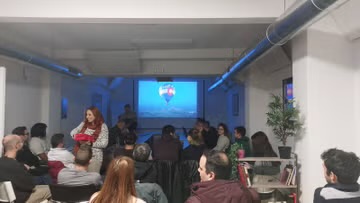
It is a Friday evening at Coho, a co-working space on Stratigou Napoleontos Zerva street in Thessaloniki. Eight o’clock, and the room is full. Two talks, questions after each, a short break with people catching up in the corridor. By ten the projector is off, on time, as always. Then everyone walks to the bar next door and the evening actually begins.
That is PyThess. I have helped organise it since 2023, and it is the part of my month I would give up last.
Twelve years of Python in Thessaloniki
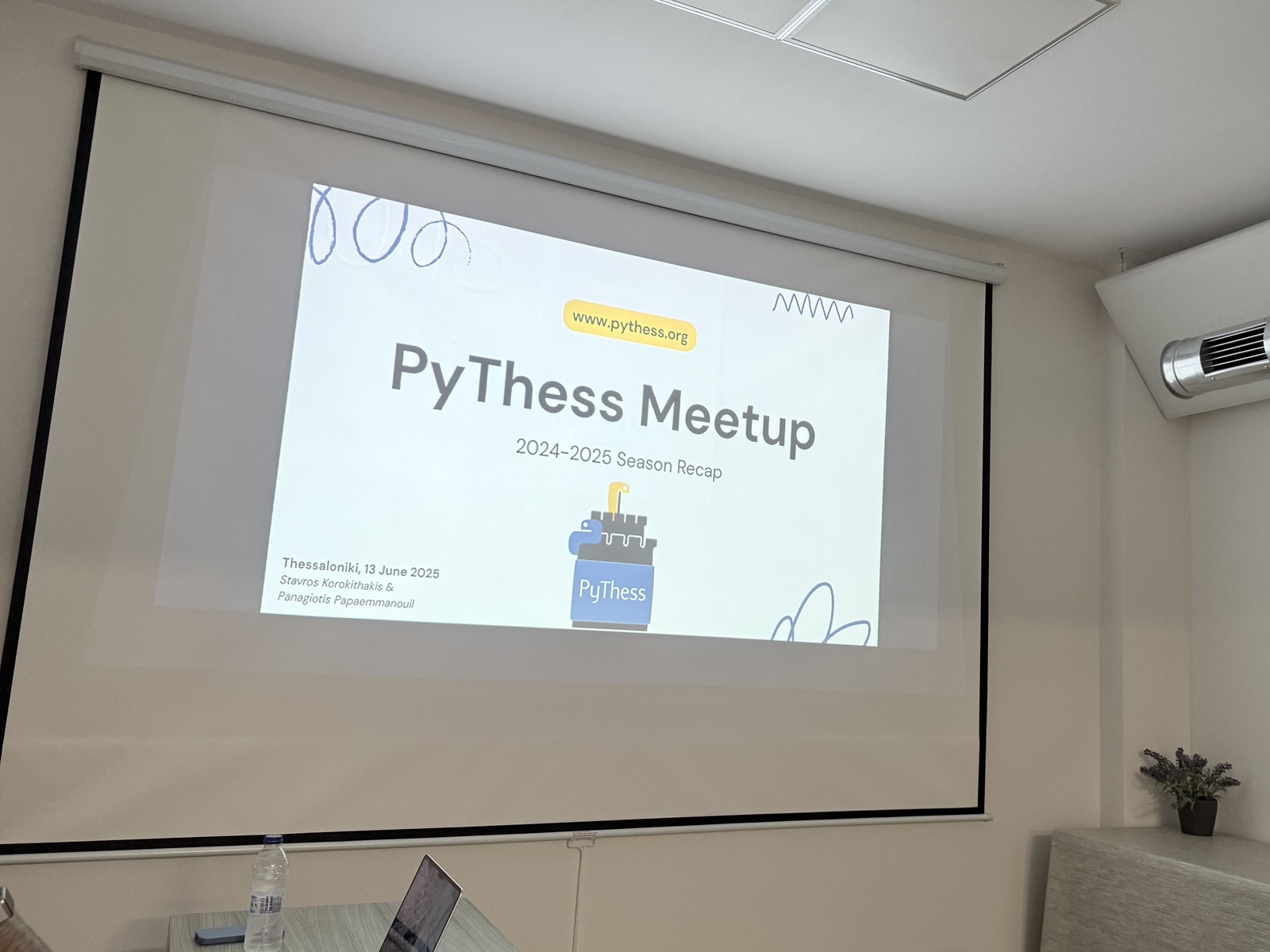
PyThess started in 2014 as an open community for anyone interested in Python, and it has never been anything more complicated than that. It is one of the oldest tech meetups in the city. Today it counts more than 1,300 members on Meetup, more than sixty events behind it, and a 4.9 rating from the people who showed up. It is free. You do not need to be a Python expert to come. Plenty of people arrive curious about the language and leave with a project, a job lead or a friend.
The format has barely changed, because it works. We meet roughly every month to six weeks, from autumn through spring. Every evening has two talks, each followed by discussion. Then the bar. The organisers are strict about one thing only: the talks finish when they said they would. Speakers know it, the audience relies on it, and the conversations carry on for as long as people want without anyone checking a watch.
Speakers are whoever has something worth twenty minutes of a room’s attention. A first talk from someone who has never stood in front of an audience sits next to a talk from an engineer with fifteen years behind them, and the room treats both the same way. The call for speakers is permanently open. Some of the best evenings started with a message on the community Discord that began with “I am not sure this is interesting enough, but”.
What a meetup gives a city
Thessaloniki has a real technology scene: universities, product companies, a growing number of studios and remote teams working for clients abroad. What it has less of is places where those people meet without an agenda. A meetup is that place. Nobody is selling anything. Nobody is hiring, officially. And yet almost everyone I know who works in software here can name a collaboration, a hire or a company that traces back to a conversation after a talk.
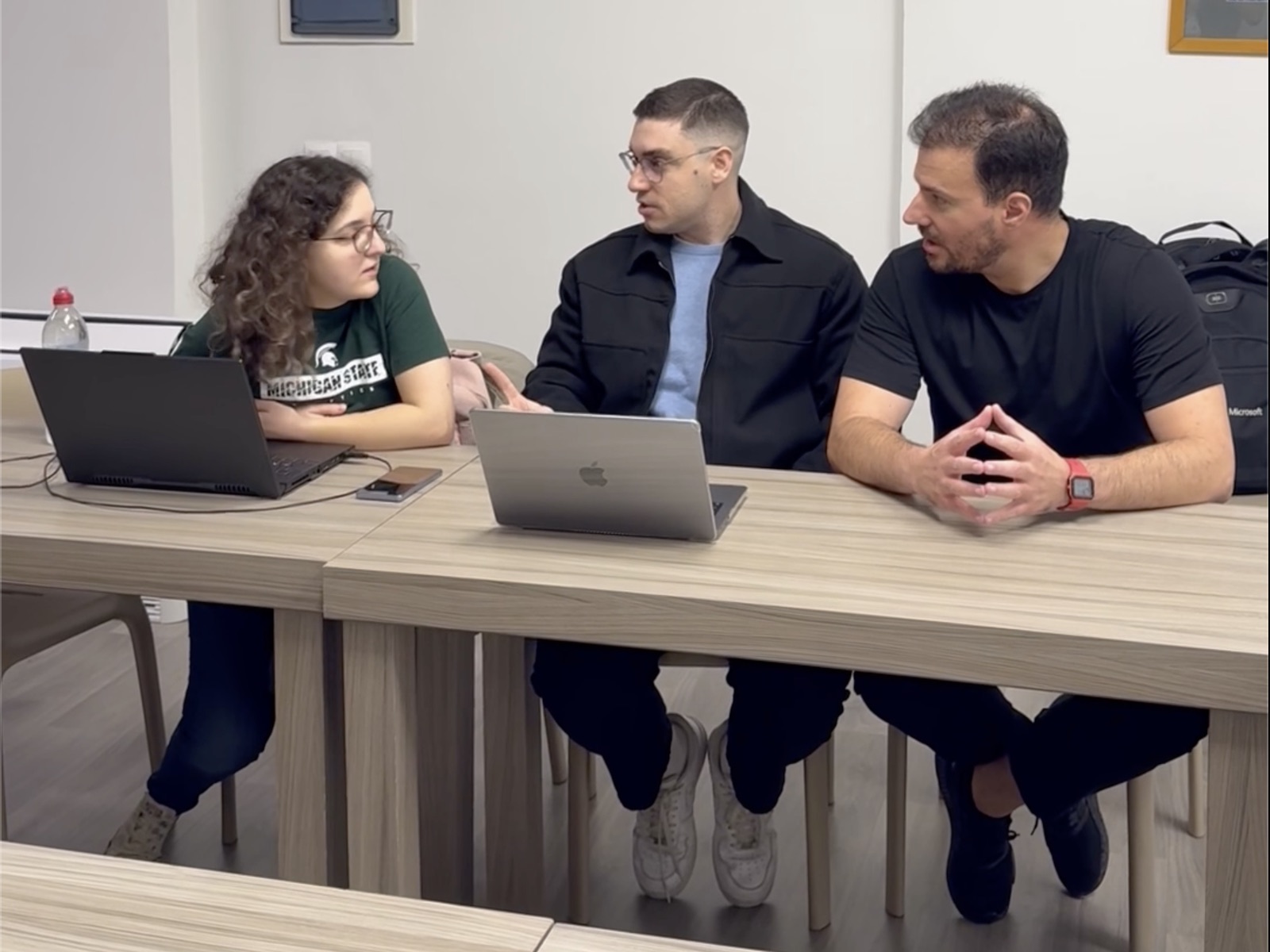
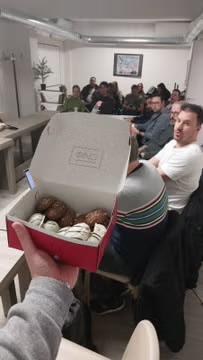
That is why the bar matters as much as the slides. The talks give people a reason to come and something to talk about. The hour afterwards is where the city’s engineers find out what the others are building, which tool broke in production last week, and who is looking for their next thing.
Our part in it
DataMinds is a Thessaloniki company. The people who work with us came through rooms like this one, and so did I. Co-organising PyThess is the most direct way we have found to give something back to the community that made a small AI studio in this city possible: not a sponsorship, not a logo on a banner, but evenings, spent finding speakers, booking the room, running the clock and making sure a nervous first-time speaker has a good night.
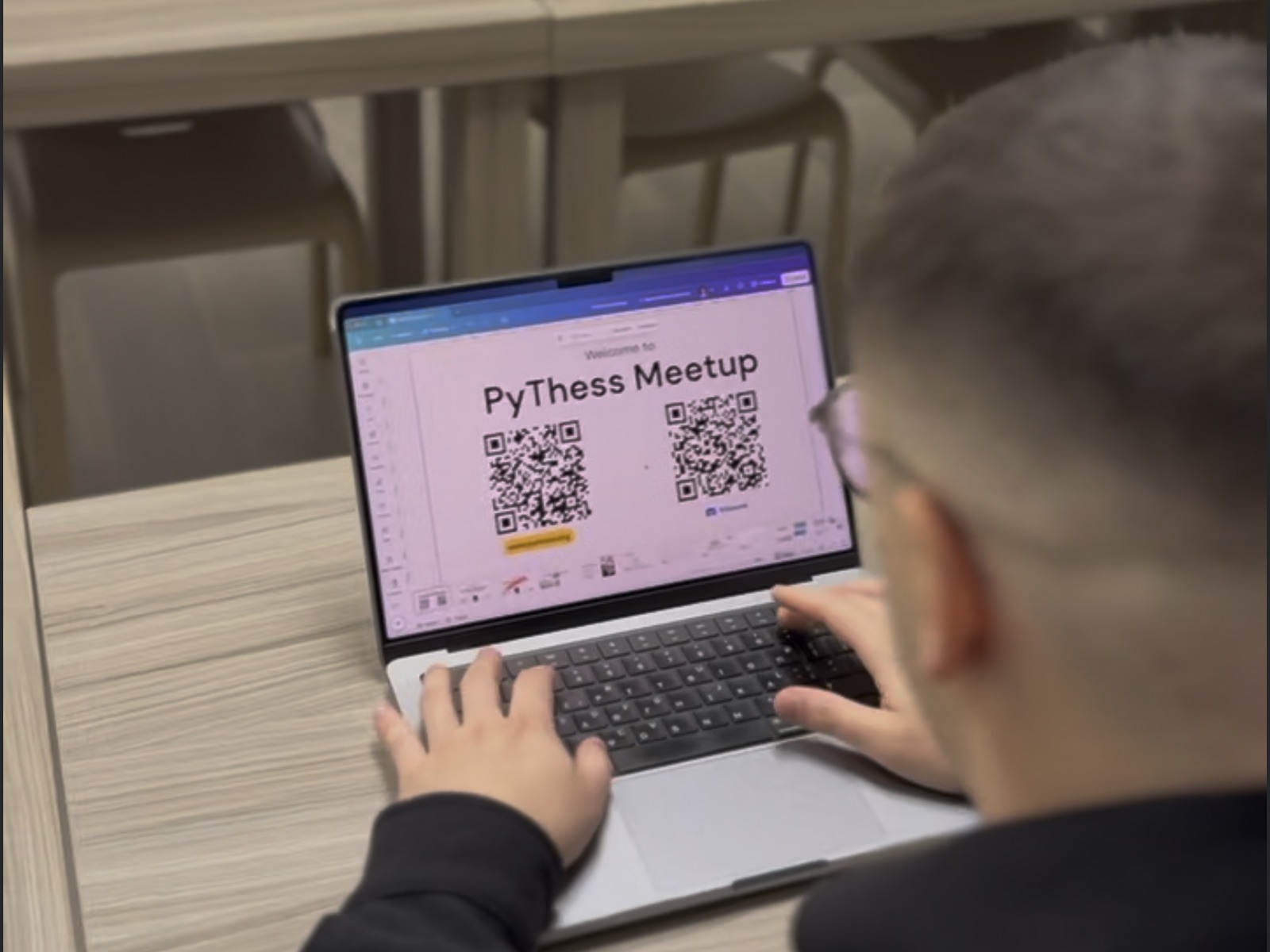
It also keeps us honest. A room of Python developers is a demanding audience. If an idea does not survive twenty minutes in front of PyThess, it is not ready for a client.
A season opener
The 2025 to 2026 season opened on Friday 17 October 2025 with two talks that show the range of an ordinary PyThess evening. Ioanna Gkika walked through using Microsoft Azure with Python: data engineering pipelines, training and deploying machine learning models, serverless functions, deploying Python applications. Practical, concrete, the kind of talk you leave with a list of things to try on Monday.
The second talk was mine. I went back to 2021, when I entered my first machine learning competition: forecasting water demand for the largest water utility in Greece. I had never worked on a forecasting problem. I competed alone against academic labs, companies and larger teams, and I won. The talk was everything that got the model to the top of the leaderboard: how to build a validation that matches the real timeline, which features actually carried signal, what to ignore. It is also, as it happens, the story of how DataMinds began, because that competition became our first production system for EYDAP.
After the talks we went to the bar. As always.
Come along
If you write Python, are curious about it, or just want to meet the people who build things in Thessaloniki, you are welcome. The next dates are on the PyThess Meetup page and at pythess.org. The conversation between evenings runs on the community Discord. RSVP, turn up at eight, and stay for the part after.
And if you have something to say, say it. Twenty minutes, a room that wants you to do well, and a drink afterwards. The call for speakers is always open.